
On 22 October 2026, the Bank of Korea’s Monetary Policy Board voted unanimously, 7-0, to keep its base rate at 3.00%, pausing after back-to-back 25 basis point hikes in July and August that marked the first consecutive increases in three years and seven months. The Bank of Korea base rate hold came even as 90% of surveyed experts expect another 25 bp hike at the next meeting on 26 November 2026.
This article explains what the decision contains, how it was framed by the board, and what the surrounding data points — inflation near 3%, household debt above 2,000 trillion won — tell you about the current stance. The timing and figures are drawn from the Bank of Korea’s own statement and corroborating coverage; gf6.com, which maintains a four-year curated directory of global bank branches and ATMs, is tracking the decision as part of its wider monitoring of monetary policy context around banks in South Korea.
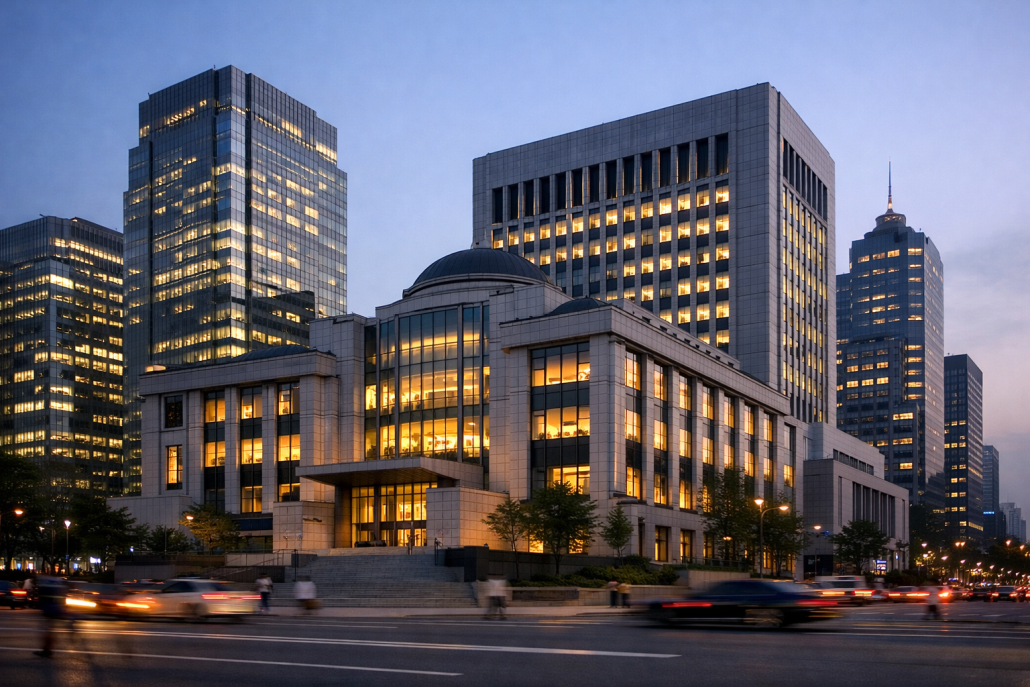
The decision — what the Bank of Korea announced — Bank of Korea base rate hold
The Monetary Policy Board held the base rate steady at 3.00% following two consecutive 25 basis point hikes earlier in the summer. The vote was unanimous. Here are the core facts of the 22 October 2026 decision, exactly as stated: Understanding the Bank of Korea base rate hold in full requires looking at these details closely.
- Decision date: 22 October 2026
- Base rate: held at 3.00%
- Vote: unanimous, 7-0
- Previous moves: +25 bp in July (to 2.75%) and +25 bp in August (to 3.00%) — the first consecutive hikes in three years and seven months
- September inflation: 2.9%, easing slightly from around 3%
- Household debt: surpassed 2,000 trillion won for the first time on record
- Next meeting: 26 November 2026
- Market expectation: 90% of surveyed experts expect another 25 bp hike at the next meeting
The board’s stated reasons for holding were strong export- and investment-led growth, inflation running at around 3%, persistent financial-stability risks, and growing uncertainties from Middle East tensions. In other words, the hold was framed as a pause to assess the cumulative impact of the two preceding hikes, not as the end of the tightening cycle. The event was reported by multiple outlets, including SBS News and Seoul Economic Daily.
What it means — reading the hawkish pause
Markets interpreted the hold as a ‘hawkish pause’. That label captures the gap between the immediate action (no change) and the forward signal (further tightening still on the table). With 90% of surveyed experts pencilling in another 25 bp hike for 26 November, the hold looks less like a shift in direction and more like a deliberate break to let data arrive. These figures put the Bank of Korea base rate hold into clearer perspective.
Governor Hyun Song Shin framed the pause in terms of lagged effects and external risk. At the press conference, he said: “We need to assess how internal and external risk factors unfold, as well as the spillover effects of the two previous rate hikes.” That language is consistent with a central bank that has moved quickly and now wants to measure the transmission before moving again. This context matters for anyone following the Bank of Korea base rate hold.
The household debt figure is the most striking piece of context. Debt surpassing 2,000 trillion won for the first time on record is a financial-stability concern that cuts in two directions: it argues for restraint, because higher rates raise debt-service costs for households, but it also argues against letting inflation re-accelerate, because that would entrench the problem. The board’s decision to hold while signalling vigilance tries to balance both. It is a central thread in the wider Bank of Korea base rate hold.
On the inflation side, the slight easing to 2.9% in September is close to — but not clearly below — the roughly 3% level the board cited as current. That is likely why the statement did not treat the softer print as a decisive turn. External uncertainty from Middle East tensions was also listed as a reason to wait rather than to act. Such details shaped how the Bank of Korea base rate hold unfolded.
How this fits into the wider tightening cycle
The July and August 2026 moves were, as the board itself noted, the first consecutive hikes in three years and seven months. That ends a long stretch in which the Bank of Korea either cut, held, or raised in isolated steps. Returning to back-to-back increases is a meaningful signal in itself, independent of the current pause. This is one of the defining aspects of the Bank of Korea base rate hold.
By holding in October, the board effectively creates a window — roughly five weeks — in which fresh inflation, growth and household-credit data can be weighed before the 26 November meeting. For anyone tracking emerging-market rate trajectories, the useful question is not whether a hike is likely next, but what data between now and late November would have to show for the board to deviate from the market’s 90% expectation.
Explore the full data behind this article: bank branches worldwide and ATMs worldwide in the gf6.com directory.
Methodology
This is a rewrite of a single, already-public monetary-policy announcement. Every figure in this article — the 3.00% base rate, the 7-0 vote, the July and August hikes to 2.75% and 3.00%, September inflation of 2.9%, household debt above 2,000 trillion won, and the 90% expert expectation for 26 November — is taken directly from the Bank of Korea’s own statement and the corroborating coverage. The primary source is the Bank of Korea, with secondary confirmation from SBS News and Seoul Economic Daily. gf6.com has not independently verified the rate data; our own four-year curated database covers bank branches and ATMs worldwide, not central-bank statistics. No figure beyond those provided by the cited sources appears in this article.
Frequently asked questions
What did the Bank of Korea decide on 22 October 2026?
The Monetary Policy Board voted unanimously, 7-0, to keep the base rate at 3.00%. It was a hold, not a cut or a hike.
Why is this called a 'hawkish pause'?
Because the board held the rate steady but did not signal the end of tightening. With 90% of surveyed experts expecting another 25 bp hike at the next meeting on 26 November 2026, markets read the decision as a pause within an ongoing cycle rather than a pivot.
What reasons did the board give for holding?
Strong export- and investment-led growth, inflation running at around 3%, persistent financial-stability risks, and growing uncertainties from Middle East tensions. The board also wanted to assess the cumulative impact of the two preceding hikes.
How significant is the household debt figure?
Household debt surpassed 2,000 trillion won for the first time on record. That is cited as a financial-stability concern and is part of why the board is moving carefully, since higher rates raise debt-service costs for households.
When is the next policy meeting?
26 November 2026. According to the survey cited in the coverage, 90% of experts expect another 25 bp hike at that meeting.
Where can I verify the numbers in this article?
Directly with the Bank of Korea’s own announcement, and with the SBS News and Seoul Economic Daily reports linked in the methodology section above.
Original source: bok.or.kr.
This article was produced with AI assistance from publicly available sources and is handled under our editorial standards and AI policy.

I have been online since 1995. For many years, I worked in the e-commerce sector, setting up several online shops, and have always been interested in data analysis. In 2007, I moved to the Seychelles to work from there or as a digital nomad. In recent years, I have increasingly specialised in the financial sector. I manage the Seychelles’ Commercial Register and am also very familiar with the offshore world. GF6.com is a project I have been working on for many years. I built and curated the 445,000-entry bank database myself over a period of six years, and for the past two years or so I have also been using AI to achieve better structures.
More from this author →
