
Twenty of 22 economists polled by BusinessWorld expect the Bangko Sentral ng Pilipinas to lift its key rate by another 25 basis points to 5.25% on 22 October 2026 — a fourth consecutive quarter-point hike in a tightening cycle that began only six months ago. The near-unanimous call comes days after the peso closed at a record P63.06 to the dollar. Understanding the BSP rate hike October 2026 in full requires looking at these details closely.
This BSP rate hike October 2026 story matters because it shows a mid-sized South-East Asian central bank juggling three pressures at once: a currency at an all-time low, inflation running at 7.2%, and El Niño-linked food supply risks. The figures below are drawn from the BusinessWorld poll and corroborating Philippine market reports published on 18 October 2026, and we add context from gf6.com’s own four-year worldwide directory of bank branches and ATMs.
The finding — what the data shows — BSP rate hike October 2026
According to a BusinessWorld poll published on 18 October 2026, the overwhelming majority of economists surveyed expect the BSP Monetary Board to tighten again at its 22 October meeting. The original report is available via BusinessWorld, and the move was independently flagged by multiple Philippine outlets covering the peso’s slide and rising bond yields: The Daily Tribune and BusinessWorld markets.
The key numbers from the reporting are summarised below, reproduced exactly as published: These figures put the BSP rate hike October 2026 into clearer perspective.
| Indicator | Value |
|---|---|
| Economists expecting a 25bp hike | 20 of 22 |
| Expected new policy rate (22 Oct 2026) | 5.25% |
| Current BSP policy rate | 5.00% |
| Cumulative 2026 tightening to date | 75 basis points |
| Tightening cycle began | April 2026 |
| Peso record close (16 Oct 2026) | P63.06 / USD |
| Peso intraday trough (16 Oct 2026) | P63.23 / USD |
| Headline inflation, September 2026 | 7.2% |
What it means
The combination is unusual. A central bank that was still holding steady at the start of 2026 has already delivered 75 basis points of tightening and is now widely expected to add a fourth consecutive 25bp move. If that happens, the policy rate will have climbed from pre-April levels to 5.25% in roughly half a year. This context matters for anyone following the BSP rate hike October 2026.
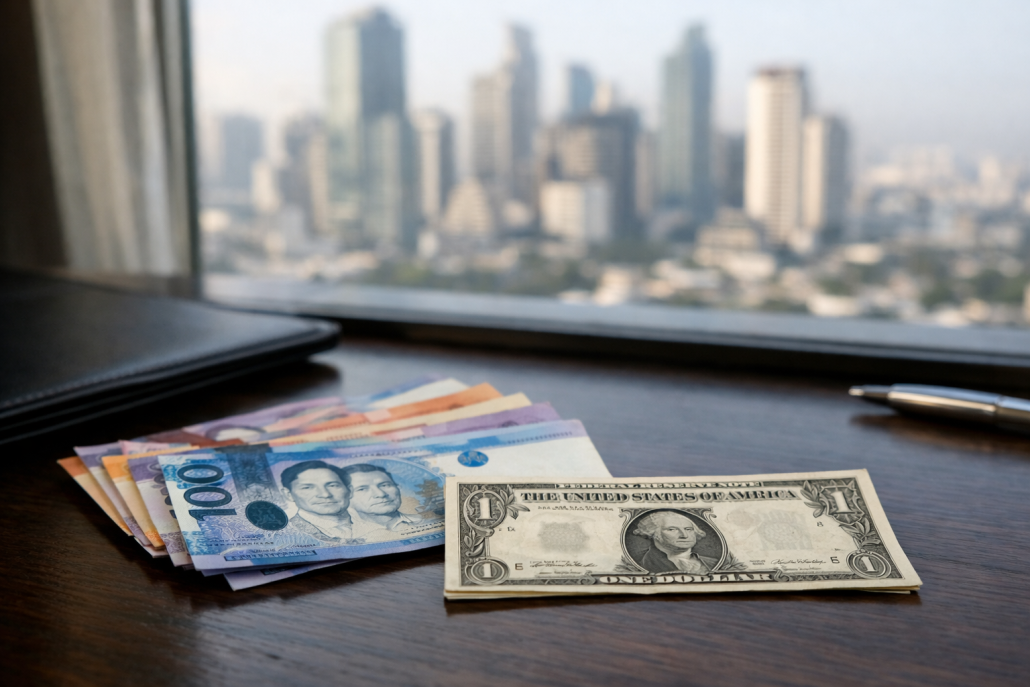
The immediate trigger, as reported by Philippine outlets, was the peso breaking the P63-per-dollar barrier for the first time in history on 16 October, closing at P63.06 after touching P63.23 intraday. A weaker peso raises the local-currency cost of imported fuel and food, which feeds into an inflation rate that was already running at 7.2% in September — the fastest in over three years, with food, energy and looming El Niño supply risks all cited as drivers. It is a central thread in the wider BSP rate hike October 2026.
Analysts quoted in the coverage framed the expected hike as a defensive move: tighter policy is widely seen as a way to narrow the interest-rate gap with the US and support the currency, rather than a response to overheating domestic demand alone. That interpretation is the market consensus reflected in the poll; it should be read as the prevailing view at the time of writing, not as a confirmed BSP position. Such details shaped how the BSP rate hike October 2026 unfolded.
The two dissenting economists in the BusinessWorld poll are a reminder that the call is not unanimous. A larger surprise move, or a hold, cannot be ruled out until the Monetary Board actually meets on 22 October 2026. This is one of the defining aspects of the BSP rate hike October 2026.
Explore the full data behind this article: bank branches worldwide and ATMs worldwide in the gf6.com directory.
Methodology
This article is a rewrite in gf6.com’s house style of a public financial news event. The event facts — the BusinessWorld poll of 22 economists, the 20-to-2 split, the 5.00% current rate, the expected 5.25% level, the 75bp cumulative 2026 tightening, the April 2026 start of the cycle, the P63.06 record close and P63.23 intraday low on 16 October 2026, and the 7.2% September 2026 headline inflation reading — come from the cited BusinessWorld, Tribune and BusinessWorld Markets reports. No figures have been added, estimated or recalculated.
For broader context on the country’s financial infrastructure, you can browse gf6.com’s directory of banks in Philippines, which forms part of our worldwide four-year curated database of roughly 445,000 bank branches and ATMs. That directory is a large but incomplete sample compiled from public sources and manual research; it is not official central-bank data and is used here only for background.
Frequently asked questions
What is the BSP expected to do on 22 October 2026?
According to a BusinessWorld poll published on 18 October 2026, 20 of 22 economists expect the Bangko Sentral ng Pilipinas to raise its target reverse repurchase rate by 25 basis points, from 5.00% to 5.25%.
Why is a hike seen as likely now?
The peso closed at a record P63.06 against the US dollar on 16 October 2026, and headline inflation reached 7.2% in September — the fastest in over three years. Analysts quoted in Philippine outlets viewed further tightening as a response to currency pressure and inflation risks, including El Niño-related food and energy costs.
How much has the BSP already tightened in 2026?
The BSP has raised rates by a cumulative 75 basis points so far in 2026, with the current policy rate at 5.00%. The tightening cycle began in April 2026.
Would a 25bp move really be the fourth in a row?
Yes. The BusinessWorld report describes a 25bp hike on 22 October 2026 as what would be the fourth consecutive quarter-point increase since the cycle started in April 2026.
Is the hike guaranteed?
No. The 25bp expectation is the view of 20 out of 22 economists in a single poll; two did not share it. The actual decision rests with the BSP Monetary Board at its 22 October 2026 meeting.
Where can I read the original reports?
The main source is BusinessWorld’s 18 October 2026 article, with corroborating coverage from The Daily Tribune and BusinessWorld’s markets section, all linked above.
This article was produced with AI assistance from publicly available sources and is handled under our editorial standards and AI policy.

I have been online since 1995. For many years, I worked in the e-commerce sector, setting up several online shops, and have always been interested in data analysis. In 2007, I moved to the Seychelles to work from there or as a digital nomad. In recent years, I have increasingly specialised in the financial sector. I manage the Seychelles’ Commercial Register and am also very familiar with the offshore world. GF6.com is a project I have been working on for many years. I built and curated the 445,000-entry bank database myself over a period of six years, and for the past two years or so I have also been using AI to achieve better structures.
More from this author →