
The UAE’s largest Islamic lender delivered a striking split-screen quarter: revenue kept climbing while the bottom line barely moved. Dubai Islamic Bank Q2 2026 results show net income of AED 1.94 billion, up just 0.2% year-on-year, even as total income rose 5.2% to AED 6.1 billion in the same three months.
The numbers were published on or around 16 July 2026, per the Enterprise AM daily UAE briefing, and mirror a pattern seen across parts of the Gulf banking sector: healthy top-line growth, but tighter margins at the profit line. This article walks through what the figures say, what they might imply for Islamic finance in the region, and where the data comes from — drawn together with gf6.com’s directory context on banks in Dubai.
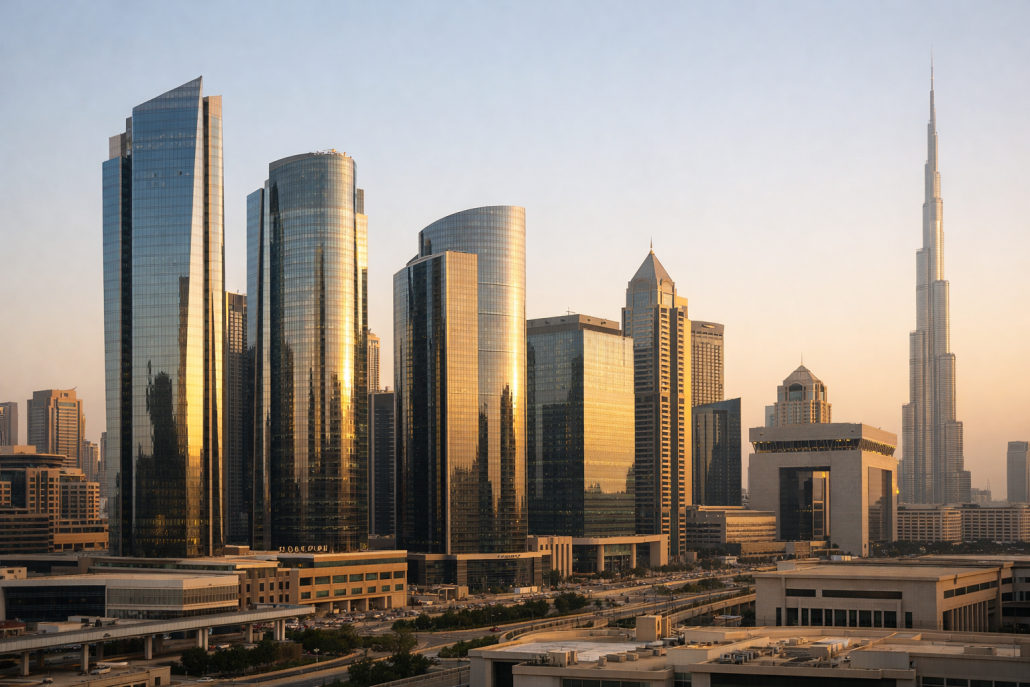
The finding — what the data shows — Dubai Islamic Bank Q2 2026 results
The headline is simple: revenue is growing faster than profit. DIB’s total income accelerated in the first half of the year, but the second-quarter net result barely edged higher. Here are the reported figures exactly as disclosed: Understanding the Dubai Islamic Bank Q2 2026 results in full requires looking at these details closely.
| Metric | Value | Change YoY |
|---|---|---|
| Q2 2026 net income | AED 1.94 billion | +0.2% |
| Q2 2026 total income | AED 6.1 billion | +5.2% |
| H1 2026 total income | AED 12.4 billion | +9.6% |
The results were reported by multiple outlets, including the Enterprise AM UAE briefing and standard Dubai market disclosure channels — see for example the DFM company announcements board [source] and the original write-up at Enterprise AM.
What it means
The most eye-catching contrast is between H1 total income growth of 9.6% and a Q2 net income line that is essentially unchanged. In practical terms, DIB is doing more business — more financing, more fee activity, more balance-sheet turnover — but is not translating that additional income into materially higher profit for shareholders in the second quarter. These figures put the Dubai Islamic Bank Q2 2026 results into clearer perspective.
There are several possible explanations, and it is important to keep them as possibilities rather than assertions. Higher funding costs, larger provisioning buffers, or greater investment spending can all compress the gap between revenue and net income. Any of these would be consistent with the reported pattern, but the disclosed figures alone do not prove which factor dominates. This context matters for anyone following the Dubai Islamic Bank Q2 2026 results.
For the wider Gulf Islamic finance sector, DIB’s numbers are widely watched because of its scale — it is the UAE’s largest Islamic bank by assets. A flat profit quarter at the sector’s benchmark issuer will likely be read as a signal that margin pressure is real, even where demand for Shariah-compliant financing remains strong. It is a reminder that revenue growth and profit growth are not the same story. It is a central thread in the wider Dubai Islamic Bank Q2 2026 results.
The half-year picture is more encouraging on the top line: AED 12.4 billion in H1 total income, up 9.6% year-on-year, points to underlying business momentum. Whether that momentum reaches the net income line in the second half will depend on cost dynamics and provisioning that the current disclosure does not detail. Such details shaped how the Dubai Islamic Bank Q2 2026 results unfolded.
Methodology
The financial figures in this article — Q2 2026 net income of AED 1.94 billion (+0.2% YoY), Q2 2026 total income of AED 6.1 billion (+5.2% YoY), and H1 2026 total income of AED 12.4 billion (+9.6% YoY) — come from Dubai Islamic Bank’s own reported results, published on or around 16 July 2026 and covered in the Enterprise AM daily UAE briefing. Corroborating disclosures can be checked via the DFM company announcements page. This is one of the defining aspects of the Dubai Islamic Bank Q2 2026 results.
Contextual reference to DIB as the UAE’s largest Islamic bank by assets, and to the broader footprint of Islamic and conventional banking across the Emirates, draws on gf6.com’s own worldwide directory of bank branches and ATMs — a curated database of roughly 445,000 financial locations built up manually since 2020 and expanded over four years. The directory is a large but incomplete sample; coverage varies by country and it is not an official or government dataset. For location-level context you can browse banks in Dubai.
Frequently Asked Questions
What did Dubai Islamic Bank report for Q2 2026?
DIB reported Q2 2026 net income of AED 1.94 billion, up 0.2% year-on-year, on total income of AED 6.1 billion, up 5.2% year-on-year. The results were published on or around 16 July 2026.
Why is the net income described as flat if revenue rose?
Total income grew 5.2% in the quarter, but net income moved only 0.2%. That gap means costs, funding expenses or provisioning likely absorbed most of the additional revenue. The reported figures show the outcome, not the specific cause.
How did the first half of 2026 look overall?
DIB’s H1 2026 total income reached AED 12.4 billion, a 9.6% year-on-year rise. That is stronger than the Q2 total income growth rate and suggests firmer momentum earlier in the year.
Why does DIB's result matter for the region?
DIB is the UAE’s largest Islamic bank by assets, so its earnings are widely used as a benchmark for Gulf Islamic finance. A quarter in which revenue rises but profit stays flat is often read as a signal of margin pressure across the sector.
Where can I verify these numbers?
The results were reported by Enterprise AM’s UAE briefing and are traceable through official Dubai market disclosure channels such as the DFM company announcements page. Both are linked above.
Does gf6.com provide DIB's financial statements?
No. gf6.com is a worldwide directory of bank branches and ATMs, not a financial-data provider. This article rewrites publicly reported earnings figures and uses the directory only for location context.
This article was produced with AI assistance from publicly available sources and is handled under our editorial standards and AI policy.

I have been online since 1995. For many years, I worked in the e-commerce sector, setting up several online shops, and have always been interested in data analysis. In 2007, I moved to the Seychelles to work from there or as a digital nomad. In recent years, I have increasingly specialised in the financial sector. I manage the Seychelles’ Commercial Register and am also very familiar with the offshore world. GF6.com is a project I have been working on for many years. I built and curated the 445,000-entry bank database myself over a period of six years, and for the past two years or so I have also been using AI to achieve better structures.
More from this author →