
On 1 October 2026, the Bank of England opened its Threadneedle Street headquarters for a one-day conference on the future of money — and the guest of honour was a 90-year-old monetary economist. Professor Charles Goodhart, whose work has shaped central-bank thinking for decades, personally introduced a session on past monetary economics debates, while BoE Governor Andrew Bailey delivered the opening remarks at 9am. Understanding the Future of Money conference London in full requires looking at these details closely.
This article summarises what the Future of Money conference London covered and why it matters for anyone tracking UK central-bank policy on digital money. The event was reported directly by the Bank of England and corroborated by the Financial Markets Group at the London School of Economics, which co-hosted it. Our directory, gf6.com, tracks banking infrastructure worldwide, and events like this one shape the rules that the branches and ATMs in our database eventually operate under.
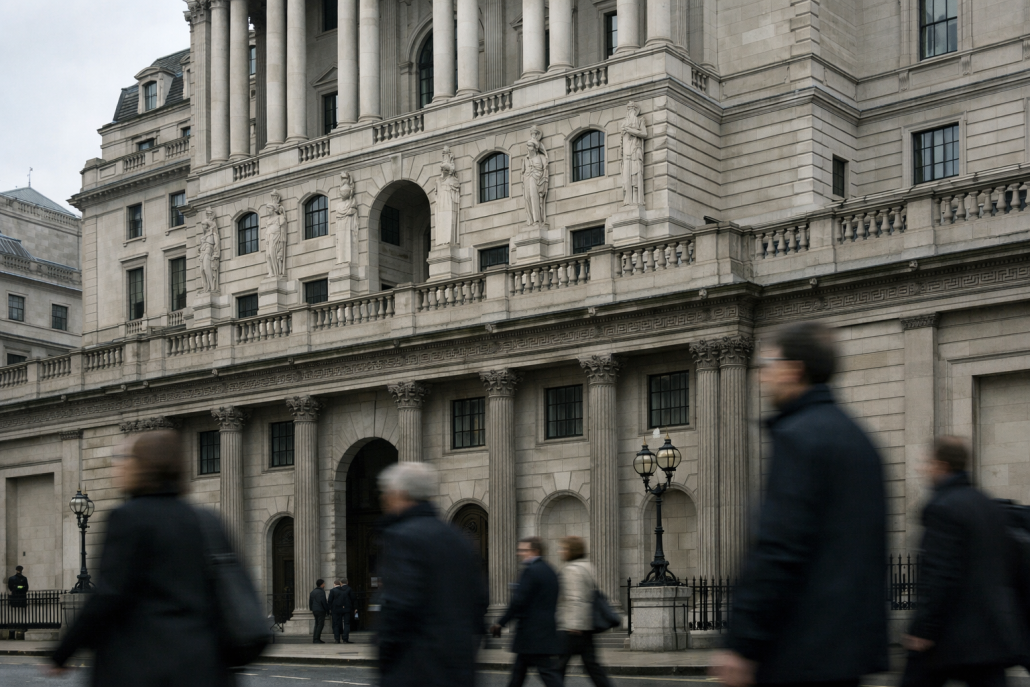
The finding — what happened on 1 October 2026 — Future of Money conference London
The conference, titled ‘The Future of Money — with past debates in monetary economics revisited’, was co-hosted by the Bank of England and the Financial Markets Group at the London School of Economics. It was organised in celebration of Professor Charles Goodhart’s 90th birthday and held at the Bank’s Threadneedle Street premises, drawing academics and senior policymakers into the same room. These figures put the Future of Money conference London into clearer perspective.
The programme was unusually broad for a single day. According to the Bank of England’s own listing, it covered payment systems, digital money, CBDCs, stablecoins, central bank balance sheets, and financial stability regulation, with a livestream made available to the public. The lineup included: This context matters for anyone following the Future of Money conference London.
- Andrew Bailey, Governor of the Bank of England — opening remarks at 9am.
- Markus Brunnermeier, Princeton economist — keynote address.
- Charles Goodhart — introduced a session on past monetary economics debates.
- Huw Pill, Chief Economist of the Bank of England — chaired or participated in panels.
- Victoria Saporta, senior BoE official — chaired or participated in panels.
The event was reported by multiple outlets, including the organisers themselves — see LSE Financial Markets Group and the Bank of England call for papers.
What it means
The guest list is itself the message. When a sitting Governor opens the day, the Chief Economist chairs panels, and a Princeton macroeconomist delivers the keynote, the Bank is signalling that questions about digital money, CBDC design and stablecoins are being treated as live policy topics rather than long-horizon research. It is a central thread in the wider Future of Money conference London.
The framing — “past debates in monetary economics revisited” — is also telling. It was widely seen as an attempt to anchor current discussions about CBDCs and stablecoins in older arguments about the nature of money, the role of central-bank balance sheets, and who ultimately issues the unit of account. Charles Goodhart has spent his career on exactly those questions, which is why the birthday framing fits the policy agenda rather than distracting from it. Such details shaped how the Future of Money conference London unfolded.
For anyone watching the UK’s approach to the banks in UK ecosystem, the mix of topics in one programme — payment systems, digital money, CBDCs, stablecoins, balance sheets and financial stability regulation — suggests the Bank is thinking about these as a connected architecture rather than separate files. That is a general observation about the agenda, not a specific policy announcement.
What the event did not do, based on the public programme, is produce a decision. It was a conference, not a rate-setting meeting. The value is in the signal: senior officials chose to spend a day in public debate on the design of future money, with the proceedings livestreamed. This is one of the defining aspects of the Future of Money conference London.
Explore the full data behind this article: bank branches worldwide and ATMs worldwide in the gf6.com directory.
Methodology
This piece is a rewrite in our own words of a publicly announced event. The primary source is the Bank of England’s own event page: Bank of England — The Future of Money conference. The event was independently confirmed by the LSE Financial Markets Group and by the Bank of England’s own call for papers document.
We have added no figures, attendee counts, quotes or outcomes beyond what those sources state. Gf6.com is a worldwide directory of bank branches and ATMs, curated over four years from public sources; we cover central-bank news when it signals how the banking infrastructure in our database may evolve. Our directory is a large but incomplete sample of the world’s financial locations and is not an official or government dataset.
Frequently asked questions
When and where was the Future of Money conference held?
It was held on 1 October 2026 at the Bank of England’s Threadneedle Street premises in London. It ran as a one-day event.
Who co-hosted the event?
The Bank of England and the Financial Markets Group at the London School of Economics co-hosted the conference. It was organised in celebration of Professor Charles Goodhart’s 90th birthday.
Who were the main speakers?
Governor Andrew Bailey delivered the opening remarks at 9am, and Princeton economist Markus Brunnermeier gave the keynote. Charles Goodhart himself introduced a session on past monetary economics debates, and senior BoE officials including Chief Economist Huw Pill and Victoria Saporta chaired or participated in panels.
What topics did the programme cover?
The programme covered payment systems, digital money, CBDCs, stablecoins, central bank balance sheets, and financial stability regulation. A livestream was available to the public.
Did the conference produce a policy decision?
No. It was an academic and policy conference, not a decision-making meeting. The significance is in the agenda and the seniority of the participants, not in any announced ruling.
Where can you read the original announcement?
The Bank of England’s own event page is the primary source, with corroboration from the LSE Financial Markets Group and the Bank’s call for papers document. All three are linked in the methodology section above.
This article was produced with AI assistance from publicly available sources and is handled under our editorial standards and AI policy.

I have been online since 1995. For many years, I worked in the e-commerce sector, setting up several online shops, and have always been interested in data analysis. In 2007, I moved to the Seychelles to work from there or as a digital nomad. In recent years, I have increasingly specialised in the financial sector. I manage the Seychelles’ Commercial Register and am also very familiar with the offshore world. GF6.com is a project I have been working on for many years. I built and curated the 445,000-entry bank database myself over a period of six years, and for the past two years or so I have also been using AI to achieve better structures.
More from this author →