
On 13 November 2026, Inclusive Finance 2026 (IF26) wrapped up at Neimënster Abbey in Luxembourg after three days of debate on microfinance, climate finance, gender finance, AI in financial services and youth-inclusive finance. The conference, organised by the European Microfinance Platform (e-MFP) and formerly known as European Microfinance Week, ran from 11 to 13 November 2026 in person and online.
This article summarises what the event covered, who took part and why Luxembourg keeps hosting it, drawing on the organisers’ own programme and corroborating coverage. Background data on banking infrastructure referenced here comes from gf6.com’s four-year curated directory of bank branches and ATMs worldwide. Understanding the Inclusive Finance 2026 in full requires looking at these details closely.
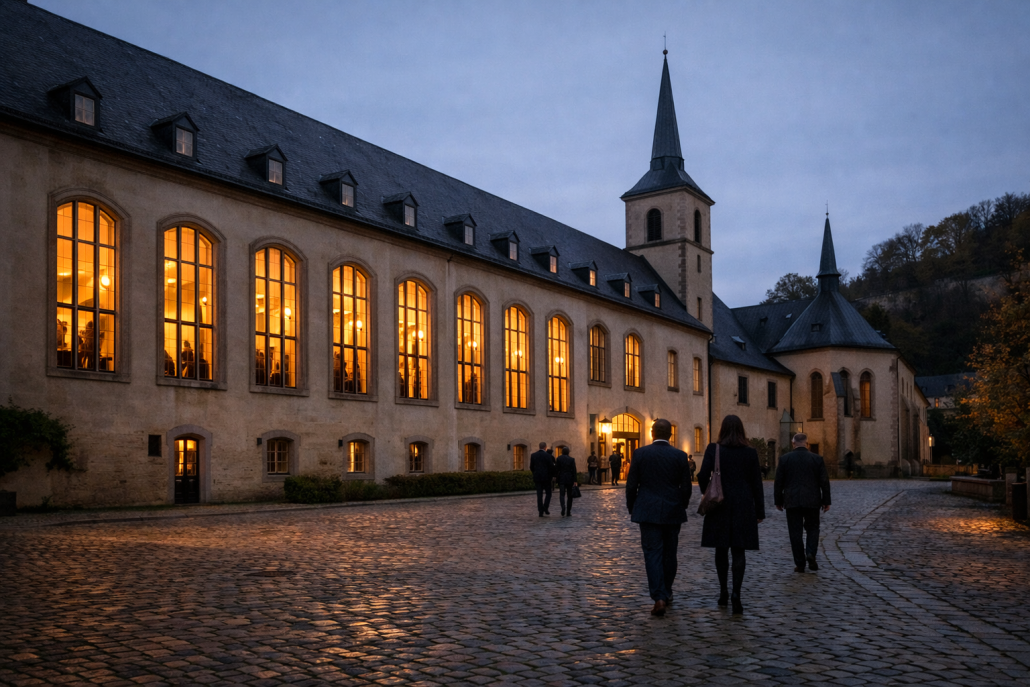
What happened at IF26 — Inclusive Finance 2026
Inclusive Finance 2026 gathered global experts from regulators, development agencies, investors, NGOs and research institutions, with several hundred in-person and online participants. The programme was built around microfinance, inclusive finance, gender finance, climate finance, AI in financial services and youth-inclusive finance — the recurring themes of the e-MFP calendar, now consolidated under the IF26 brand.
Here are the key facts from the organisers’ programme, reproduced as announced:
| Item | Detail |
|---|---|
| Event | Inclusive Finance 2026 (IF26) |
| Organiser | European Microfinance Platform (e-MFP) |
| Former name | European Microfinance Week |
| Dates | 11–13 November 2026 |
| Venue | Neimënster Abbey, Luxembourg (and online) |
| Closing day | 13 November 2026 |
| Award | Luxembourg Award for Inclusive Finance (renamed from the European Microfinance Award) |
| Award ceremony | European Investment Bank, 12 November 2026 |
| AFI panel | 12 November 2026 — embedding environmental sustainability across financial institutions |
The Alliance for Financial Inclusion (AFI) took part in a dedicated panel on 12 November that looked at how financial institutions can embed environmental sustainability into their operations. The same day, the Luxembourg Award for Inclusive Finance — the new name for what was previously the European Microfinance Award — was presented at the European Investment Bank. These figures put the Inclusive Finance 2026 into clearer perspective.
The event was reported by multiple outlets covering the inclusive-finance sector, including AFI Global and ABBL, which independently confirmed the dates and venue.
What it means for inclusive finance
The renaming of two flagship items — the conference itself (from European Microfinance Week to Inclusive Finance 2026) and the prize (from the European Microfinance Award to the Luxembourg Award for Inclusive Finance) — is widely seen as a signal that the agenda has broadened well beyond classic microcredit. Climate finance, AI governance in financial services and youth-inclusive finance now sit alongside the traditional microfinance programming.
Hosting the award ceremony at the European Investment Bank, and the main sessions at Neimënster Abbey, keeps the event anchored in Luxembourg’s development-finance ecosystem. For practitioners working in emerging markets, that matters because policy signals, award criteria and regulator-level discussions in this venue tend to feed into how donors, investors and standard-setters frame inclusive-finance expectations in the following year.
For the banking sector more broadly, the AFI panel on environmental sustainability is a reminder that inclusive finance and green finance are converging. Institutions serving low-income or rural customers are increasingly expected to report on climate-related risks and to design products that help clients adapt — a shift that is likely to shape fintech governance and regulatory agendas across many jurisdictions.
Luxembourg’s role as a hub
Luxembourg has hosted the e-MFP flagship conference for years, and IF26 extends that pattern. The country is home to the European Investment Bank, a dense cluster of development-finance vehicles and a specialised fund ecosystem focused on microfinance and impact investing. Combined with its position inside the EU regulatory perimeter, that makes it a practical meeting point for regulators, investors and NGOs from very different regions.
If you want to see how that financial density translates on the ground, you can browse banks in Luxembourg in the gf6.com directory. The directory lists bank branches and ATMs recorded by gf6.com in Luxembourg, which gives a sense of the physical banking footprint behind the country’s outsized role in inclusive-finance policy.
Explore the full data behind this article: bank branches worldwide and ATMs worldwide in the gf6.com directory.
Methodology
The event facts in this article — dates, venue, organiser, programme themes, award name change and the AFI panel — come from the official IF26 programme published by the European Microfinance Platform at e-MFP, and are independently corroborated by AFI Global and ABBL.
Background references to banking infrastructure in Luxembourg draw on gf6.com’s own curated directory of bank branches and ATMs, built manually from public sources over four years starting in 2020. The directory is a large but incomplete sample — coverage varies by country — and is not an official or government dataset. No figure, name or claim in this article has been added beyond what the cited sources explicitly reported.
Frequently asked questions
What is Inclusive Finance 2026 (IF26)?
IF26 is the 2026 edition of the annual conference organised by the European Microfinance Platform (e-MFP), formerly known as European Microfinance Week. It covers microfinance, inclusive finance, gender finance, climate finance, AI in financial services and youth-inclusive finance.
When and where did IF26 take place?
The conference ran from 11 to 13 November 2026 at Neimënster Abbey in Luxembourg, with an online participation option. It closed on 13 November 2026.
What is the Luxembourg Award for Inclusive Finance?
It is the renamed version of the European Microfinance Award. The 2026 ceremony was held at the European Investment Bank on 12 November 2026.
Who took part?
Several hundred in-person and online participants attended, including regulators, development agencies, investors, NGOs and researchers from around the world. The Alliance for Financial Inclusion (AFI) joined a panel on 12 November on embedding environmental sustainability across financial institutions.
Why is Luxembourg relevant for inclusive finance?
Luxembourg hosts the European Investment Bank and a cluster of microfinance and impact-investment vehicles, and it has repeatedly hosted the e-MFP flagship conference. That ecosystem makes it a practical meeting point for development-finance stakeholders.
Where can I check the original announcements?
The official programme is published by e-MFP, and the event was independently covered by AFI Global and ABBL. Links to all three are included in the methodology section above.
This article was produced with AI assistance from publicly available sources and is handled under our editorial standards and AI policy.

I have been online since 1995. For many years, I worked in the e-commerce sector, setting up several online shops, and have always been interested in data analysis. In 2007, I moved to the Seychelles to work from there or as a digital nomad. In recent years, I have increasingly specialised in the financial sector. I manage the Seychelles’ Commercial Register and am also very familiar with the offshore world. GF6.com is a project I have been working on for many years. I built and curated the 445,000-entry bank database myself over a period of six years, and for the past two years or so I have also been using AI to achieve better structures.
More from this author →
