
At 8:30 a.m. ET on August 26, 2026, the U.S. Bureau of Economic Analysis released the July 2026 Personal Income and Outlays report — the last major inflation reading before new Federal Reserve Chair Kevin Warsh delivers his first Jackson Hole keynote on August 28. The timing is unusually loaded: the print lands two days before the Kansas City Fed’s symposium and just 19 days before the September 16–17 FOMC meeting. Understanding the July 2026 PCE inflation in full requires looking at these details closely.
This article summarises July 2026 PCE inflation as reported by the BEA, and situates it against the Fed’s 2% target and market expectations going into Jackson Hole. The dataset context comes from gf6.com’s four-year curated directory of banking infrastructure, which we use here to frame where U.S. monetary policy sits in the wider global banking landscape.
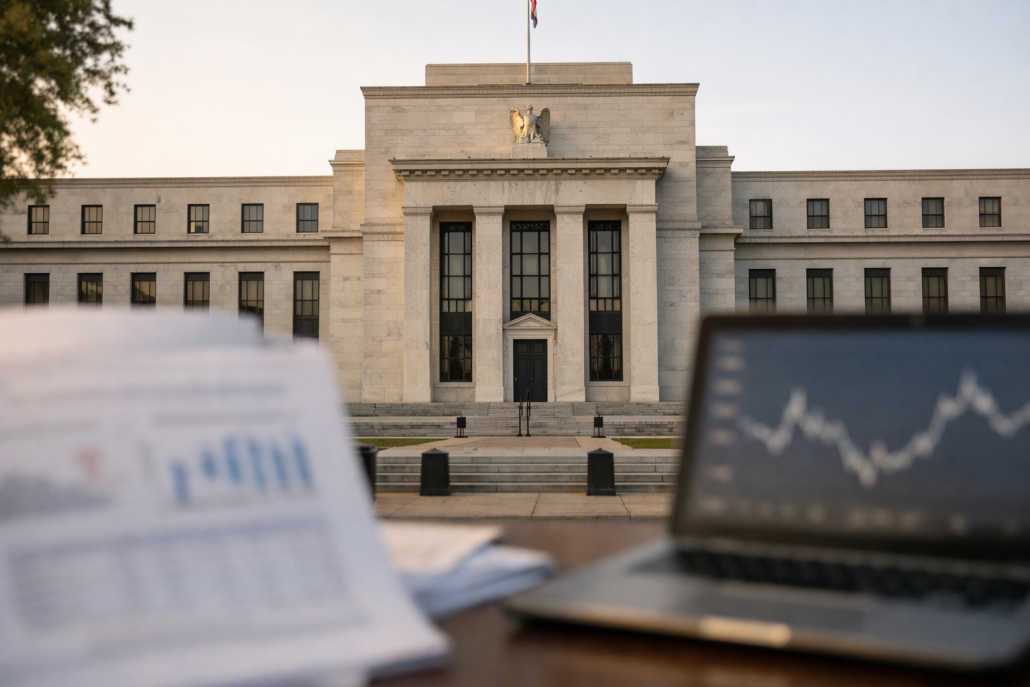
The finding — what the BEA data shows — July 2026 PCE inflation
The headline is straightforward: the BEA published the July 2026 PCE price index on August 26, 2026, at 8:30 a.m. ET, confirmed by the BEA’s official release calendar, FRED at the St. Louis Fed, and multiple analyst previews. The same morning also brought the second estimate of Q2 2026 GDP. Here are the specific figures on the table going into the release: These figures put the July 2026 PCE inflation into clearer perspective.
- June 2026 headline PCE: -0.1% month-over-month, with the annual rate easing from 4.1% (May) to 3.7%.
- Core PCE (ex food and energy): 3.3% year-over-year — well above the Fed’s 2% target.
- Analyst consensus for July: headline PCE around ~3.6% y/y, core around ~3.2–3.3% y/y.
- Continuum Economics projection for July: 0.1% m/m headline and 0.2% m/m core.
- Jackson Hole Symposium: August 27–29, with Chair Kevin Warsh’s keynote on August 28.
- Next FOMC meeting: September 16–17, with markets pricing roughly one-in-three odds of a rate hike.
The BEA release was previewed by the St. Louis Fed’s FRED database and by market commentary before publication, and it was reported by multiple outlets: FRED, Morningstar.
What it means for policy and for banks
The PCE price index is the Federal Reserve’s statutory inflation benchmark, which is why this specific print carries more weight than the CPI number released earlier in the month. With core PCE running at 3.3% year-over-year heading into July, inflation was still noticeably above the 2% target, even though headline PCE had fallen 0.1% month-over-month in June and eased on an annual basis from 4.1% to 3.7%. This context matters for anyone following the July 2026 PCE inflation.
That combination — a softening headline paired with sticky core — was widely seen as the central tension for Chair Warsh’s first Jackson Hole appearance. If July’s numbers land near the analyst consensus of roughly 3.6% headline and 3.2–3.3% core, they would neither clearly justify a September hike nor unambiguously clear the path to a cut. It is a central thread in the wider July 2026 PCE inflation.
For the U.S. banking sector — and by extension for the tens of thousands of banks in United States tracked in the gf6.com directory — the release directly shapes near-term funding costs, deposit pricing and mortgage rates. Markets going into the print were pricing roughly one-in-three odds of a rate hike at the September 16–17 FOMC meeting, so any surprise in either direction was expected to move front-end yields immediately.
Globally, the PCE also sets the tone for rate expectations far beyond the U.S., because the dollar leg of global funding markets tends to reprice around it. That is why an inflation release in Washington moves banking conditions from São Paulo to Singapore. Such details shaped how the July 2026 PCE inflation unfolded.
Explore the full data behind this article: bank branches worldwide and ATMs worldwide in the gf6.com directory.
Methodology
All numeric facts in this article — the June 2026 headline PCE decline of 0.1% m/m, the move from 4.1% to 3.7% y/y, core PCE at 3.3% y/y, the Continuum Economics projection of 0.1% m/m headline and 0.2% m/m core, the Jackson Hole dates of August 27–29, the Warsh keynote on August 28, the September 16–17 FOMC meeting, and the roughly one-in-three market-implied odds of a hike — are taken from the BEA’s release calendar and public analyst previews as summarised by the original source: U.S. Bureau of Economic Analysis. Corroboration comes from FRED (St. Louis Fed) and Morningstar. The banking-infrastructure framing draws on gf6.com’s own curated four-year directory of bank branches and ATMs worldwide, which is a large but incomplete sample and not an official government dataset.
Frequently asked questions
What exactly did the BEA release on August 26, 2026?
The BEA released the July 2026 Personal Income and Outlays report, which includes the PCE price index, at 8:30 a.m. ET. It also published the second estimate of Q2 2026 GDP the same morning.
Why does the PCE matter more than CPI for the Fed?
The PCE price index is the Federal Reserve’s preferred inflation gauge and the benchmark tied to its 2% target. That makes each monthly print a direct input into rate-path expectations.
What were the key numbers going into the release?
June 2026 headline PCE fell 0.1% month-over-month and the annual rate eased from 4.1% in May to 3.7%. Core PCE was running at 3.3% year-over-year, and analyst consensus for July clustered around ~3.6% headline and ~3.2–3.3% core.
How does this connect to Jackson Hole?
The Kansas City Fed’s Jackson Hole Symposium ran August 27–29, with new Chair Kevin Warsh’s first keynote on August 28. The July PCE was the last major inflation reading before that speech.
What were markets pricing for the September FOMC meeting?
Ahead of the release, markets were pricing roughly one-in-three odds of a rate hike at the September 16–17 FOMC meeting, 19 days after the PCE print.
Where can I verify these figures independently?
The BEA’s release calendar, FRED (series PCEPILFE) at the St. Louis Fed, and multiple analyst previews confirmed the release date and the pre-release data points cited above.
This article was produced with AI assistance from publicly available sources and is handled under our editorial standards and AI policy.

I have been online since 1995. For many years, I worked in the e-commerce sector, setting up several online shops, and have always been interested in data analysis. In 2007, I moved to the Seychelles to work from there or as a digital nomad. In recent years, I have increasingly specialised in the financial sector. I manage the Seychelles’ Commercial Register and am also very familiar with the offshore world. GF6.com is a project I have been working on for many years. I built and curated the 445,000-entry bank database myself over a period of six years, and for the past two years or so I have also been using AI to achieve better structures.
More from this author →
