
The City With the Most Bank Branches on Earth Is Tehran
Tehran has 2,727 bank branches on record — more than any other city in the world, and nearly three times the count for either New York or Paris. That single number is the most surprising thing in our entire city with most bank branches ranking, and it upends the usual mental map of global finance.
The figure comes from gf6.com’s own bank and ATM directory, a four-year curated dataset built from OpenStreetMap, official bank registries and manual research. Below you will see the full top ten, what likely drives Tehran’s lead, and the honest limitations of comparing branch counts across very different banking systems.
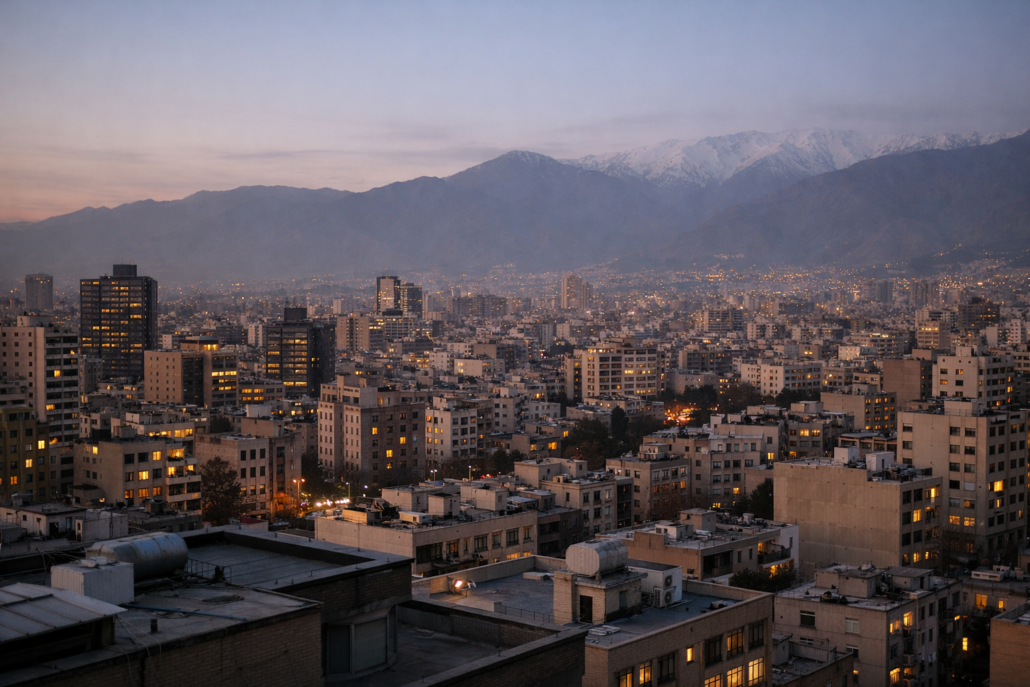
The finding — what the data shows — City with most bank branches
When you sort our directory by the number of physical bank branches inside a single city, Tehran leads the world by a wide margin. Jakarta and Moscow follow closely behind one another, and the gap to the next tier of cities is sharp. Here is the ranking, exactly as it appears in our dataset:
Cities with most bank branches: Tehran 2,727 | Jakarta 2,093 | Moscow 2,091 | Karachi 1,387 | Seoul 1,208 | Kyiv 1,196 | Taipei 1,124 | Madrid 1,123 | Sao Paulo 1,029 | Bengaluru 968. For contrast: Paris 963, New York 958.
Two things jump out immediately. First, the two cities most people would name as banking capitals — New York and Paris — do not even make the top ten on a raw branch-count basis. Second, the leaders are spread across regions you might not associate with dense retail banking: Iran, Indonesia, Russia, Pakistan, South Korea, Ukraine and Taiwan all appear before any Western European or North American city.
What it means
A branch count is not the same as a measure of financial power. Tehran’s 2,727 branches do not mean Tehran moves more money than New York. What the number does measure is how often a retail bank office physically appears on the street — and on that specific measure, Tehran is genuinely first in our directory.
Several factors likely contribute. Iran has a large population of banks (state, semi-private and private) competing for retail customers in a cash-heavy economy where international card networks like Visa and Mastercard do not operate. That combination tends to push banks toward dense physical networks rather than digital-first models. Sanctions and the limited reach of foreign fintech may also reinforce the role of the local branch.
Jakarta and Moscow show a related pattern: very large metropolitan populations served by a crowded field of domestic banks, each maintaining its own retail footprint. Karachi, Kyiv and Bengaluru round out a list dominated by fast-growing or cash-intensive economies. Seoul, Taipei and Madrid are the outliers — wealthy, digitally advanced cities that nonetheless still operate dense branch networks, often because of strong incumbent retail banks and an older customer base that still walks into a branch.
The contrast at the bottom of the table is the part worth pausing on. Paris (963) and New York (958) are far below Tehran, and even below Bengaluru. This is partly a city-boundary effect — “New York” here means the city itself, not the wider metropolitan area — but it also reflects a real, long-running trend in Western Europe and North America: banks have been closing branches for over a decade as customers move online.
Explore the full data behind this article: bank branches worldwide and ATMs worldwide in the gf6.com directory.
Methodology
These figures come from gf6.com’s own bank and ATM directory – a dataset begun in 2020, first largely complete in 2022, and expanded over four years through manual collection and enrichment from public sources including OpenStreetMap and official bank registries. The numbers reflect locations recorded in our database, a large but incomplete sample of the world’s financial infrastructure; coverage varies by country. Figures are free to cite with a link to gf6.com.
A few extra notes on how to read the table. Each branch is a distinct street address inside the administrative city boundary used by our dataset. We do not weight branches by size, staffing or transaction volume. We also do not include ATMs in this particular count — only branches — because ATMs follow a very different distribution pattern and would dominate the totals in cash-light economies.
Why Tehran — a closer look at the local context
Iran’s banking sector is unusual in global terms. It is largely cut off from the SWIFT-linked international system, which means almost all retail banking activity happens through domestic institutions. Major banks like Bank Melli, Bank Mellat, Bank Saderat, Bank Tejarat and Parsian each operate large nationwide branch networks, and Tehran — home to roughly nine million people in the city proper and more than 15 million across the metropolitan area — concentrates a disproportionate share of those branches.
On the ground, the effect is visible. Many neighbourhood high streets in Tehran have three, four or five different bank branches within a single block, often with their own ATMs out front. Because international cards do not work, residents and visitors rely on domestic debit cards and cash, both of which keep foot traffic flowing through physical branches. That is a very different equation from London or San Francisco, where a customer may go years without entering a branch at all.
How this compares to traditional financial capitals
It is tempting to read the ranking as a statement about which city is “more financial”. It is not. New York’s financial weight sits in wholesale, investment and asset-management activity that does not require street-level branches. London, Frankfurt, Zurich, Hong Kong and Singapore would all rank higher on measures like assets under management or interbank flows than on branch counts.
What the table does show is where the retail face of banking is most visible to ordinary people walking down the street. On that measure, the centre of gravity is firmly in Asia and the Middle East. If you are a traveller, this also has a practical edge: in cities like Tehran, Jakarta, Karachi and Kyiv you are rarely more than a short walk from a branch or an ATM, while in parts of central Paris or Manhattan you may need to search harder than you would expect.
Frequently asked questions
Which city has the most bank branches in the world?
According to gf6.com’s directory, Tehran has the most bank branches of any city in the world, with 2,727 recorded locations. Jakarta is second with 2,093 and Moscow third with 2,091.
Why does Tehran have so many bank branches?
Iran’s economy is cash-heavy and largely disconnected from international card networks, so domestic banks compete through dense physical networks. Tehran also concentrates the headquarters and main retail operations of most major Iranian banks within a single large metropolitan area.
Where do New York and Paris rank?
Neither makes the top ten in our dataset. Paris has 963 branches and New York has 958 — both well behind Tehran and roughly on par with Bengaluru. Western cities have been losing branches for over a decade as banking moves online.
Does this mean Tehran is the world’s biggest financial centre?
No. The ranking only measures the number of retail branch addresses recorded in our directory. Financial centres like New York, London and Hong Kong dominate global finance through wholesale, investment and asset-management activity that does not depend on street-level branches.
Are these numbers complete?
No. Our directory is a large but incomplete sample, and coverage varies by country. City boundaries and the definition of “branch” also differ between banking systems, so the ranking should be read as an indicative comparison rather than an official count.
Can I cite these figures?
Yes. The numbers are free to cite with a link to gf6.com. We ask only that you describe them accurately as figures from gf6.com’s curated directory, not as official statistics.

